
Laravel, Minus the Spaghetti Code.
Most Laravel apps rot into fat controllers and silent queue failures nobody monitors. I build custom — service architecture, integration resilience, zero spaghetti code.
Custom Laravel Development Built for Real Integrations
Most Laravel projects fail not because of the framework — but because of how they're built. Business logic scattered across controllers, integrations that break silently, and queue jobs that nobody monitors.
At Black Lab Dev, I build Laravel applications with clean service architecture, proper integration engineering, and the kind of error handling that means your operations team doesn't discover problems from angry customers.
No god controllers. No silent failures. No “it works on my machine.”
Laravel Development Services
Full-service Laravel development for businesses that need production-grade applications — not a tutorial-quality prototype.
Custom API Development
RESTful and GraphQL APIs built with clean routing, proper validation, and authentication — designed to be consumed by frontends, mobile apps, and third-party systems without friction.
Platform Integrations
Shopify, SlickText, Stripe, HubSpot, Salesforce — I connect Laravel to the platforms your business already runs on. Clean service classes, proper error handling, and webhook processing that doesn't break.
Internal Tools & Admin Portals
Custom dashboards, order management systems, and operational tools that replace spreadsheets and manual processes. Built for the people who actually use them — not for a demo.
Queue & Job Processing
Background jobs, scheduled tasks, and queue-driven workflows for SMS delivery, data syncing, report generation, and anything that shouldn't block a user request.
Laravel + React / Vue SPAs
Full-stack applications with Laravel APIs powering React or Vue frontends. Clean separation of concerns, token-based auth, and real-time features when the project calls for them.
Built for Production, Not for Demos
Most Laravel shops build to get something running. I build to keep it running — under real traffic, real data, and real integration failures. The difference shows up at 2 a.m. when a webhook stops firing.
Your Laravel application becomes infrastructure your business depends on — not a fragile prototype that needs constant babysitting.
Architecture First, Code Second
I don't start with `laravel new` and figure it out as I go. Every project starts with domain modeling, integration mapping, and service architecture — then I build exactly what's needed.
Requirements & Data Modeling
I define the domain model, integration points, and data flow before writing code. Eloquent relationships, migration strategy, and API contracts are planned upfront.
Architecture & Service Design
Clean service classes, repository patterns where they earn their keep, and a folder structure that scales. No god controllers, no 500-line models.
Integration Engineering
Third-party APIs get their own service layers with proper error handling, retry logic, and webhook verification. Shopify webhooks, SMS delivery callbacks, payment events — handled correctly.
Build & Test
Feature tests for critical paths, unit tests for business logic, and integration tests for third-party connections. Code is deployed with confidence, not crossed fingers.
Queue, Cache & Performance
Redis-backed queues for async processing, proper cache invalidation, and database query optimization. The app stays fast as data grows.
Deploy & Monitor
CI/CD pipeline, environment configuration, error tracking, and performance monitoring. I don't disappear after deployment — I make sure it runs.
Built to Scale Under Real Load
Laravel applications that perform well at demo scale often fall apart under production traffic. The difference is architecture decisions made early — queue strategy, caching layers, and database optimization that's baked in, not bolted on.
I build applications that stay fast as your data grows and your integrations multiply.
When Laravel Is the Right Choice
Laravel excels at backend-heavy applications with complex integrations, queue-driven workflows, and structured APIs. If your project is mostly content, a CMS is probably the better fit — but if it's mostly logic, Laravel is hard to beat.
Recent Laravel Builds
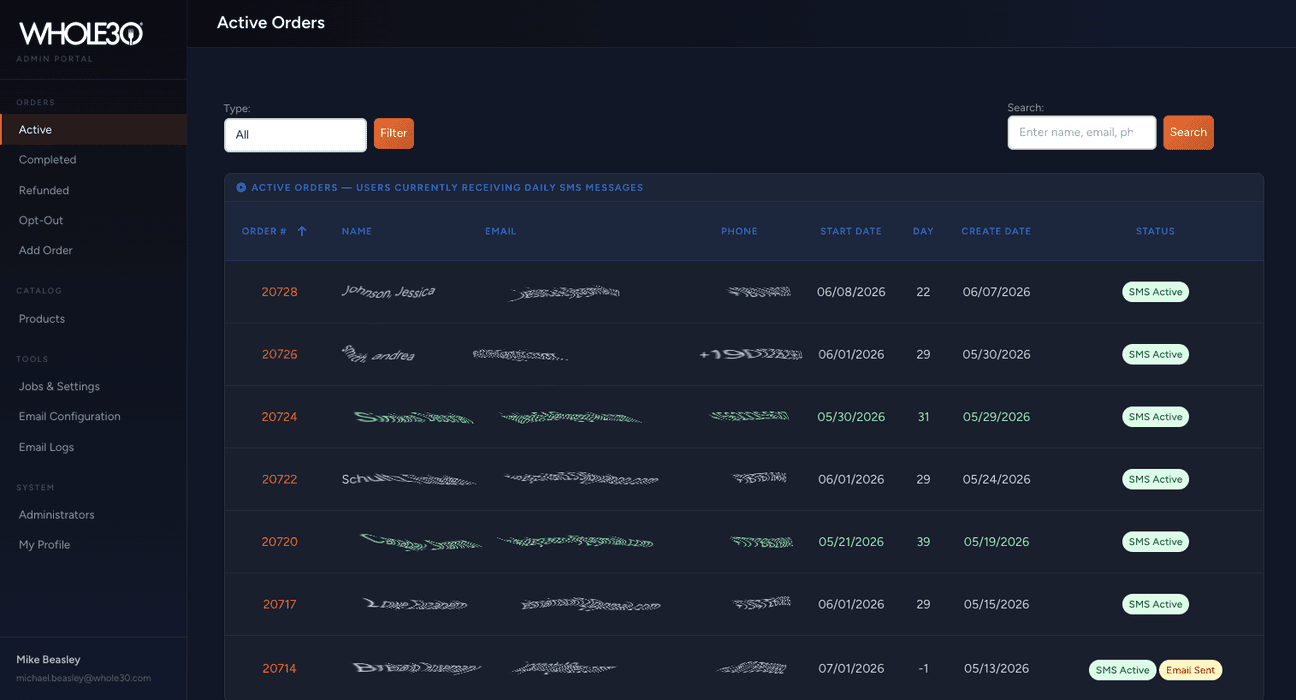
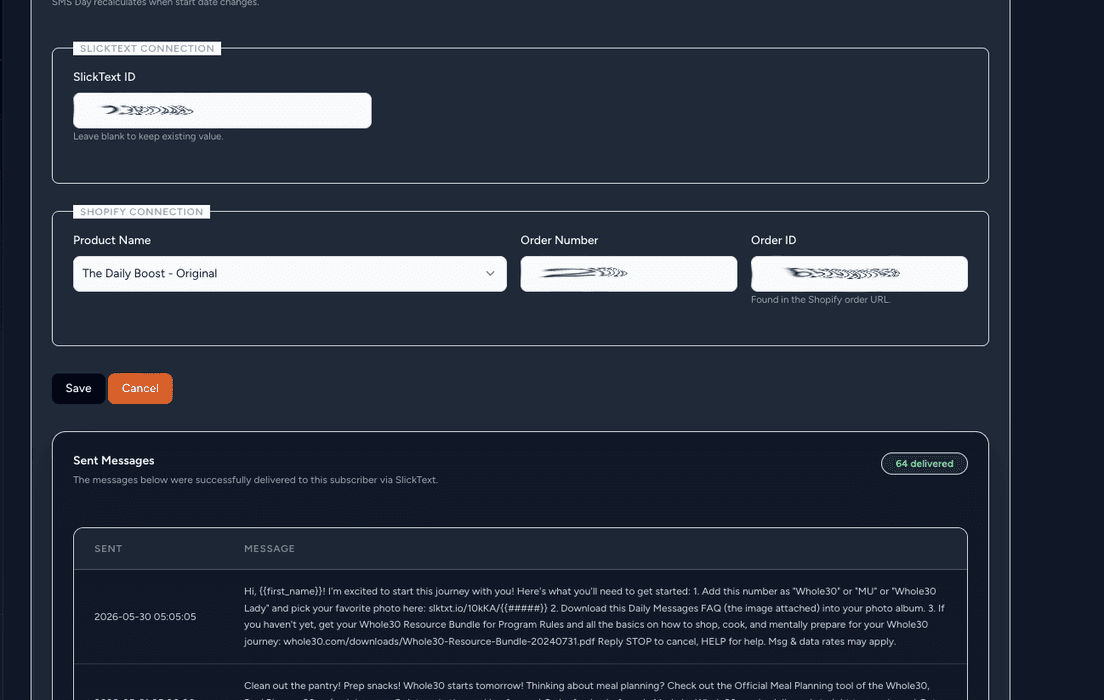
Whole30 — Shopify + SlickText SMS Platform
A custom Laravel admin portal connecting Shopify order data with SlickText SMS delivery. Manages subscriber lifecycles, automates daily SMS sequences, and gives the Whole30 operations team full visibility into order status, message delivery, and opt-out handling.

Fit30 Community — Laravel + React
A full-stack fitness community platform built with a Laravel API backend and React frontend. User management, community features, and program tracking — built for scale from day one.
Visit fit30.blacklabdev.comSiteMonitor — Uptime & Performance Monitoring
A Laravel-powered site monitoring tool with scheduled health checks, alerting, and performance tracking. Queue-driven architecture handles check scheduling without blocking the application.
Visit mntr.blacklabdev.comFrequently Asked Questions
Laravel provides the best balance of developer productivity and production-grade architecture in the PHP ecosystem. Its Eloquent ORM, queue system, job scheduling, and first-party packages for authentication, API development, and event broadcasting mean less custom plumbing and more focus on your actual business logic.
Yes. Laravel powers production applications handling millions of requests daily. With proper architecture — queue-driven processing, caching layers, database optimization, and horizontal scaling — Laravel applications perform at scale. The framework isn't the bottleneck; the architecture decisions are.
Every integration gets its own service class with proper error handling, retry logic, and webhook verification. I don't scatter API calls across controllers. Integration failures are logged, retried where appropriate, and surfaced to admins — not silently swallowed.
Both. I build full-stack applications with Laravel APIs powering React or Vue frontends, as well as Laravel apps with Blade/Livewire for admin tools and internal platforms. The frontend choice depends on your team and your users.
Most Laravel projects run 6–14 weeks depending on integration complexity, data modeling requirements, and frontend scope. API-first builds with clean integrations can ship faster. Complex platforms with multiple third-party connections and admin interfaces take longer. I scope accurately upfront.
Custom Laravel projects at Black Lab Development range from $5,000 for focused API builds and internal tools to $28,000+ for complex platforms with multiple integrations, queue-driven workflows, and custom admin interfaces. Pricing reflects actual scope and complexity.

Michael Beasley
Senior Web Developer & Founder — you work directly with me on every engagement. No account managers, no bench of junior developers.
Work With a Laravel Developer Who Builds for Production
If your application needs clean integrations, reliable queue processing, and architecture that scales — not just a working prototype — let's talk about what you're building.
No framework tourism. No tutorial-quality code. Just production-grade Laravel built by an engineer who's accountable for whether it runs.