
Your Storefront, Not an App Junk Drawer.
Most Shopify stores are slow from a bloated theme wrapped in a dozen apps — not Shopify's fault. I build custom in Liquid: clean code, resilient integrations, zero app sprawl.
Custom Shopify Development Without the App Tax
Shopify is an excellent platform. Most Shopify stores are still slow, and it usually isn't Shopify's fault — it's a premium theme customized past the point of maintainability, wrapped in a dozen apps that each inject their own JavaScript.
At Black Lab Dev, I work directly in your theme code. Liquid, Online Store 2.0 sections, metafields, and the Admin API — the actual platform, not a page builder app rented on top of it.
No page builder lock-in. No app for something the theme should just do. No monthly bill for functionality you own.
Shopify Development Services
Full-service Shopify development — from the theme your customers see to the integrations and custom apps your operations team depends on.
Custom Shopify Theme Development
Themes built from the ground up in Liquid with Online Store 2.0 sections and blocks — so your team can rearrange pages in the theme editor without a developer, and without the 400 settings nobody uses.
Shopify Plus Builds
Work inside Plus environments — Shopify Functions for custom discounts and checkout logic, checkout extensions, B2B catalogs and company accounts, Flow automations, and multi-store setups for separate regions or brands.
Custom & Private App Development
When no app in the store does what you need, I build one. Custom apps using the Admin API, Shopify Functions, and app extensions — scoped to your store, not published to a marketplace, and without a monthly per-seat bill.
Third-Party Integrations
ERP, CRM, marketing automation, SMS, and fulfillment systems connected through Shopify's Admin API and webhooks. Every integration gets verified webhook handling, retry logic, and logging — so a failed sync surfaces before a customer notices.
Headless Shopify Storefronts
Storefront API and Hydrogen builds for teams that genuinely need them — custom merchandising logic, content living in a separate CMS, or a storefront that has to share a design system with an existing app. I'll tell you honestly if a Liquid theme gets you there faster.
Storefront Performance Optimization
Auditing what your apps actually inject, removing the script tags left behind by uninstalled apps, deferring what doesn't need to block render, and fixing the LCP and CLS problems that Core Web Vitals flags on product and collection pages.
You Talk to the Developer Writing the Liquid
Most Shopify agencies put an account manager between you and the person touching your theme. Your feedback gets summarized, priorities get translated, and the context is gone by the time it reaches whoever is actually in the code.
I'm a solo developer. The person you scope the project with is the person who opens your theme, writes the sections, wires the webhooks, and answers the email when something looks wrong at checkout.
Audit the Store Before Touching the Theme
I don't start by picking a theme and styling it. Every project starts in your admin — catalog structure, metafields, installed apps, and what each one is costing your storefront — then I build against what's actually there.
Store & Catalog Audit
I start in your admin: how products, variants, and metafields are actually structured, which apps are installed, what each one injects into the storefront, and where your current theme is fighting you.
Data Modeling with Metafields
Merchandising details, spec tables, and editorial content belong in metafields and metaobjects — not hardcoded in Liquid or pasted into product descriptions. I model that before building templates.
Theme Architecture
Sections, blocks, and snippets planned so your team can build new pages in the theme editor. Clear naming, real presets, and settings scoped to what merchandisers will actually change.
Build in Liquid
Templates built directly in theme code with version control and a development theme for review. No page builder app layered on top of the theme, and no rented visual editor holding your layouts hostage.
Integrations & Custom Logic
Admin API integrations, verified webhooks, and custom apps or Shopify Functions where the platform needs extending. Errors are logged and retried, not silently dropped.
Performance Pass & Handoff
Core Web Vitals measured on real product and collection pages, app scripts audited and trimmed, then a walkthrough of the theme editor so your team can run the store without me.
Fast Storefronts Are a Build Decision
Shopify gives you a fast CDN and a fast checkout. What slows a store down is everything added on top — app scripts, oversized hero images, render-blocking third-party tags, and Liquid that does expensive work on every page load.
I treat performance as part of the build, not a cleanup project after launch. That means measuring on real product and collection pages under your actual catalog — where the problems actually live.
When Custom Shopify Work Pays Off
If a stock theme and a few apps are serving you well, keep them — that's the right answer for plenty of stores. Custom development earns its cost when the theme is fighting your catalog, when app subscriptions have outgrown their value, or when your store needs to talk to systems that apps don't handle reliably.
Recent Shopify Work
The Shortening Shuttle — Custom Shopify Storefront
A custom Shopify storefront for a specialty food brand, built directly in Liquid with Tailwind CSS rather than customizing a premium theme. Product and collection templates were built to fit the catalog, and an interactive oil savings calculator gives customers a concrete number for what the product saves them — turning a spec sheet into a reason to buy.
Visit shortening-shuttle.com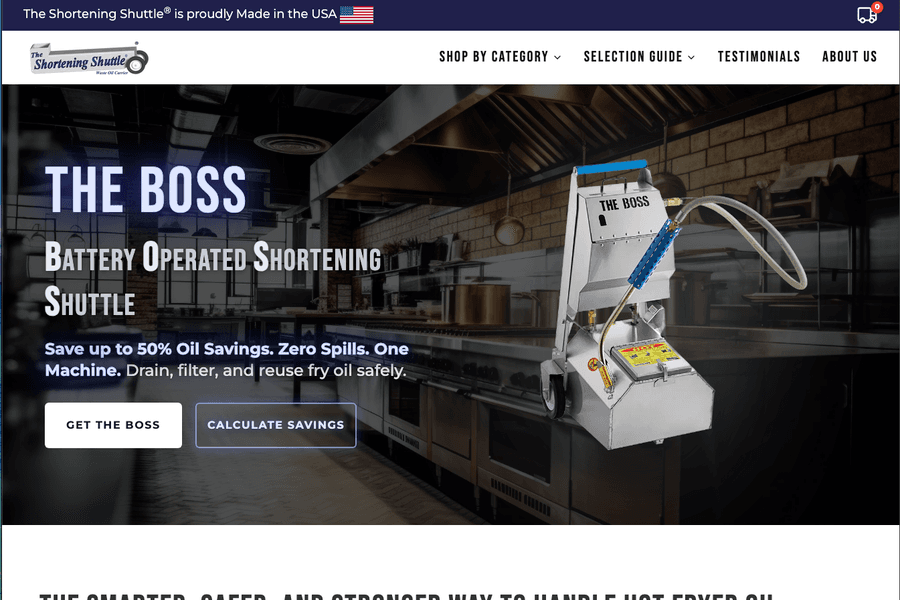
Whole30 — Shopify Order Data Integration
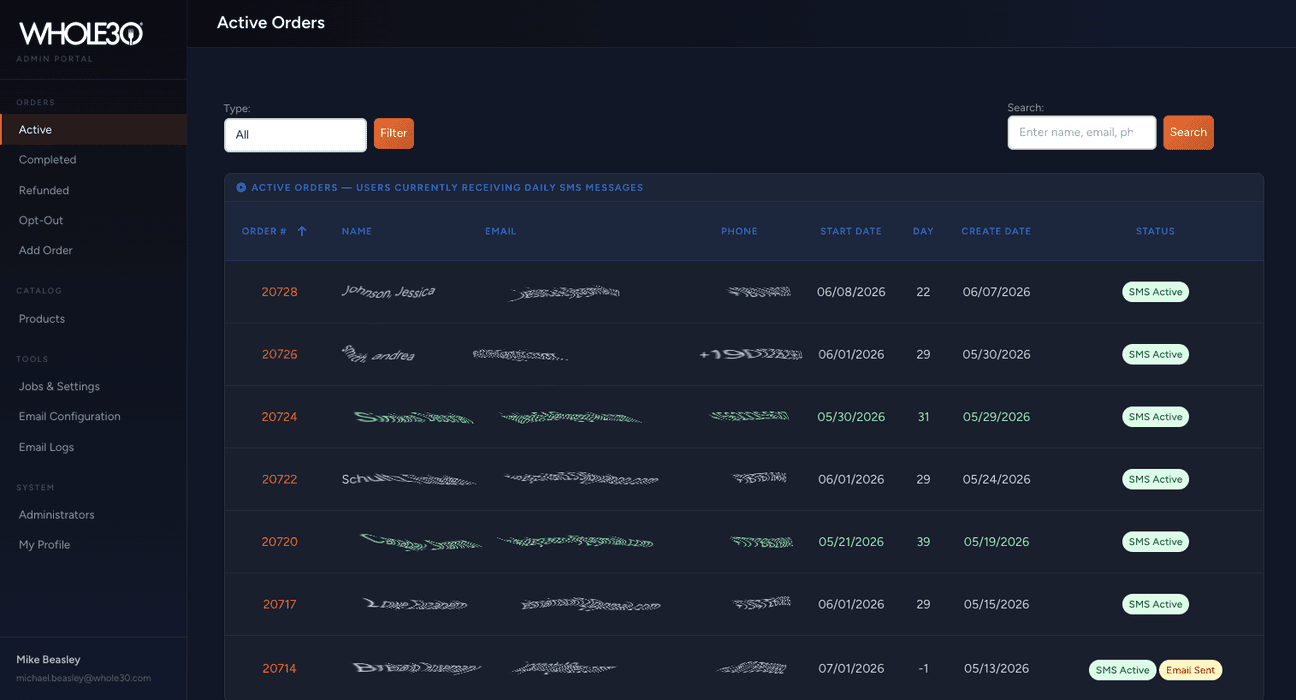
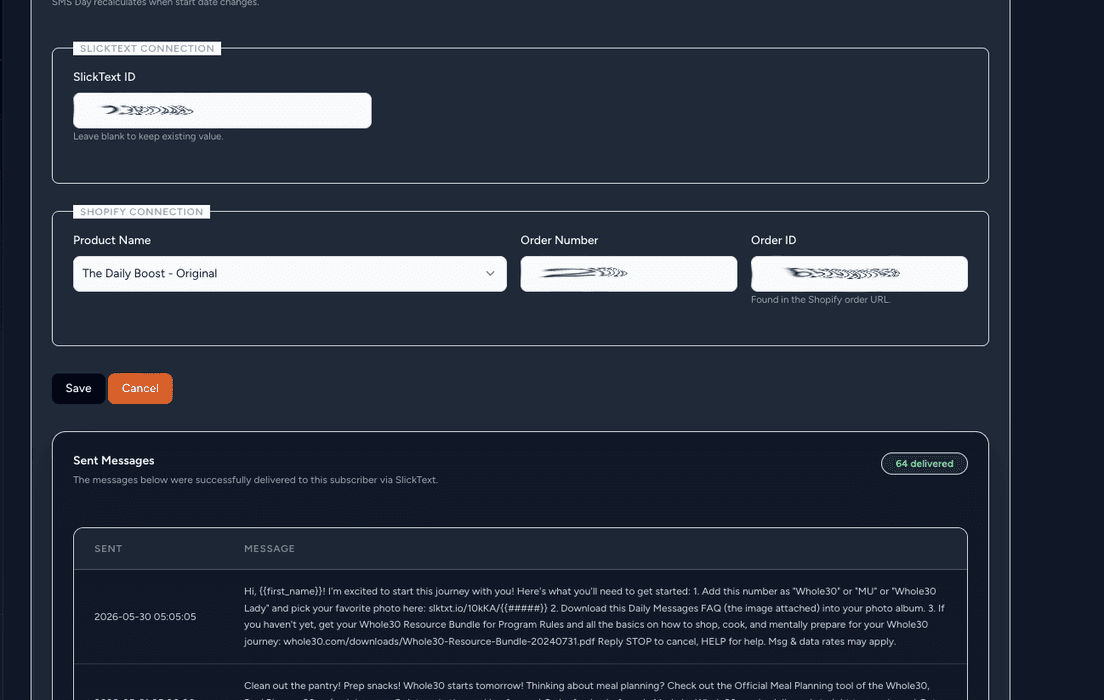
Shopify integration engineering rather than a storefront build. I built a custom Laravel admin portal that processes Shopify order webhooks in real time and drives SlickText SMS sequences from that order data — subscriber lifecycles, daily message automation, and delivery tracking, with the operations team able to see exactly what fired and when. The storefront itself isn't part of this build; the Shopify work here is the API and webhook layer.
Frequently Asked Questions
For most stores, a custom Liquid theme with Online Store 2.0 sections is the right answer — it ships faster, keeps the native checkout, and your team can edit pages in the theme editor without a deploy. Headless makes sense when you need custom merchandising logic Liquid can't express, when content lives in a separate CMS that drives the storefront, or when the storefront has to share a design system with an existing application. Headless also means you now own the hosting, caching, and preview infrastructure that Shopify handles for you. I'll recommend a theme unless there's a concrete reason not to.
Only if you need what Plus actually unlocks: checkout customization through Shopify Functions and checkout extensions, B2B company accounts and catalogs, multiple storefronts under one organization, or higher API limits for heavy integration traffic. Plenty of stores are on Plus for features they never turned on. If you're already on Plus, I'll use those capabilities properly. If you're not, I'll tell you honestly whether your requirements need it.
Yes. Migrations are mostly a data problem, not a design problem: mapping products, variants, and custom fields into Shopify's product model and metafields, moving customer records without breaking password resets, preserving order history where the platform allows it, and — the part most migrations get wrong — mapping every old URL to a 301 redirect so you don't lose the search rankings you've already earned. I plan the redirect map before launch, not after traffic drops.
More than most merchants realize. Each app that injects a script tag adds render-blocking JavaScript, and uninstalled apps often leave their script tags and theme snippets behind. A store running fifteen apps is frequently loading code from apps nobody uses anymore. I audit what's actually loading on your storefront, remove the orphaned leftovers, and replace the worst offenders with theme code or a custom app where it's worth doing.
Most custom theme builds run 5–10 weeks depending on catalog complexity, how many templates need custom treatment, and whether metafield modeling is involved. Adding a custom app or a significant third-party integration extends that. Headless storefronts take longer because you're building the infrastructure the theme layer normally provides. I scope from your actual catalog and requirements, not a package tier.
Custom Shopify projects at Black Lab Development range from $4,000 for a focused custom theme build to $24,000+ for headless storefronts or builds with custom apps and multiple system integrations. Migrations and performance remediation sit in between depending on catalog size and how much cleanup the existing store needs. Pricing reflects actual scope — I quote after the audit, not before.

Michael Beasley
Senior Web Developer & Founder — you work directly with me on every engagement. No account managers, no bench of junior developers.
Work With a Shopify Developer Who Opens the Theme
If your storefront is slow, your app bill keeps growing, or your theme can't do what your catalog needs — let's talk about what you're actually trying to sell and what's getting in the way.
No page builder lock-in. No app for everything. Just clean Liquid, real integrations, and a developer who's accountable for how the store performs.