The Problem
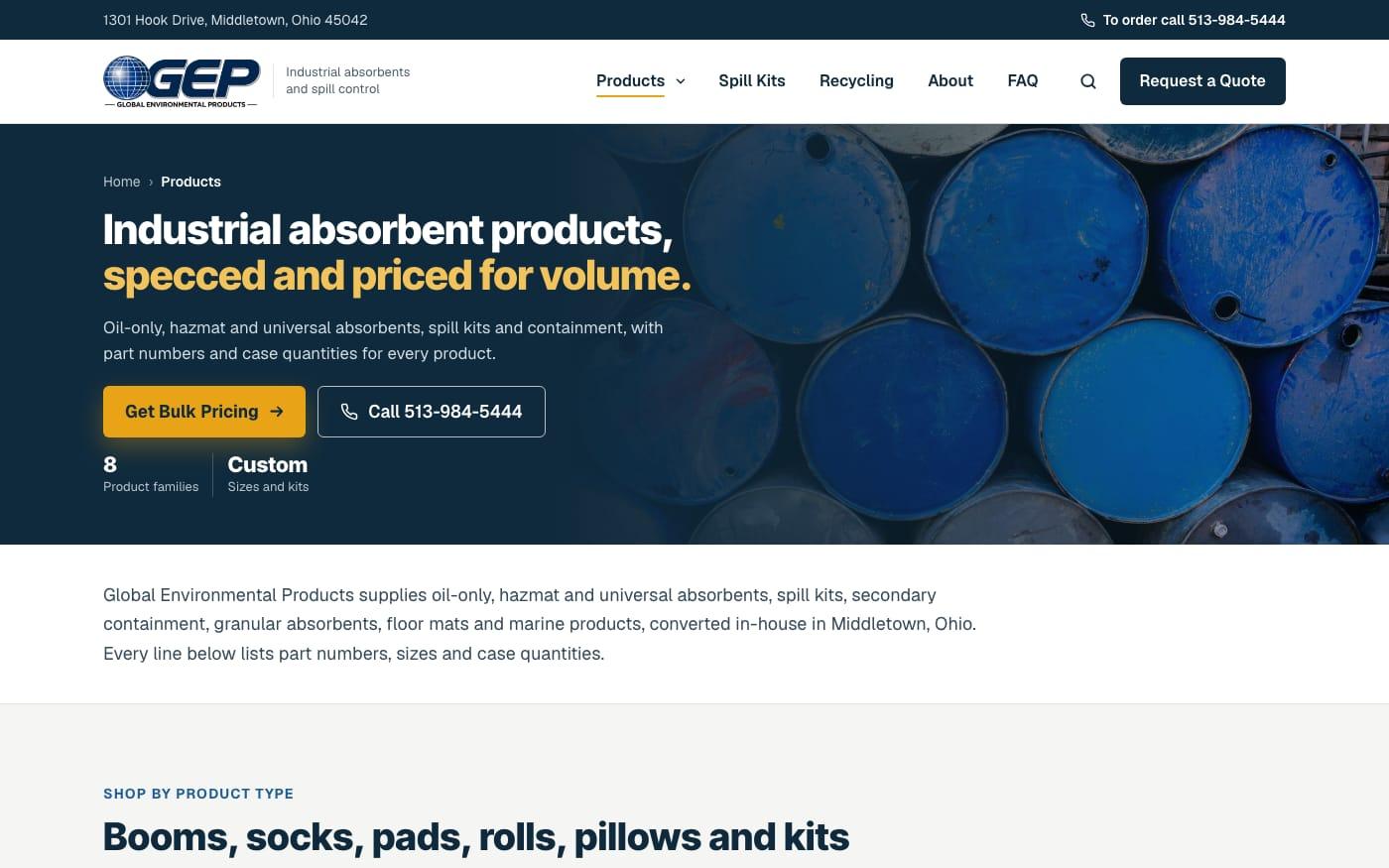
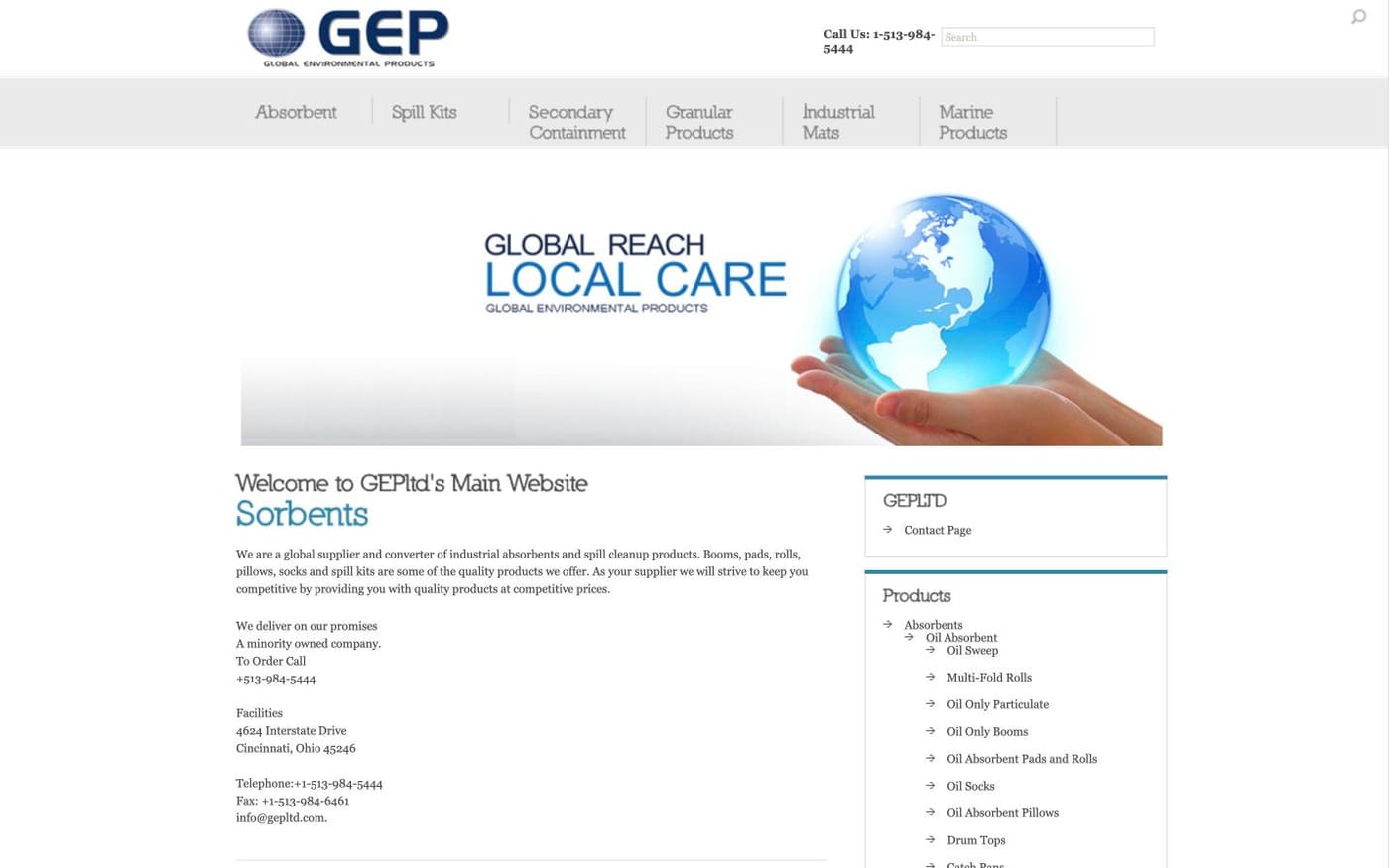
Global Environmental Products converts and supplies industrial absorbents, spill kits and containment products from Middletown, Ohio. Their website was from 2011 and looked it: a stock globe banner, a homepage headed "Welcome to GEPltd's Main Website", an outdated facility address, and a sidebar that listed every product in one long tree.
There was no clear way to ask for pricing. A buyer who knew what they needed had to read a phone number off the page, and one who didn't had nothing to help them choose. The footer even carried a "sponsored by" link to an unrelated business, a leftover from an old SEO arrangement.
What We Did
A catalog built around how buyers spec products
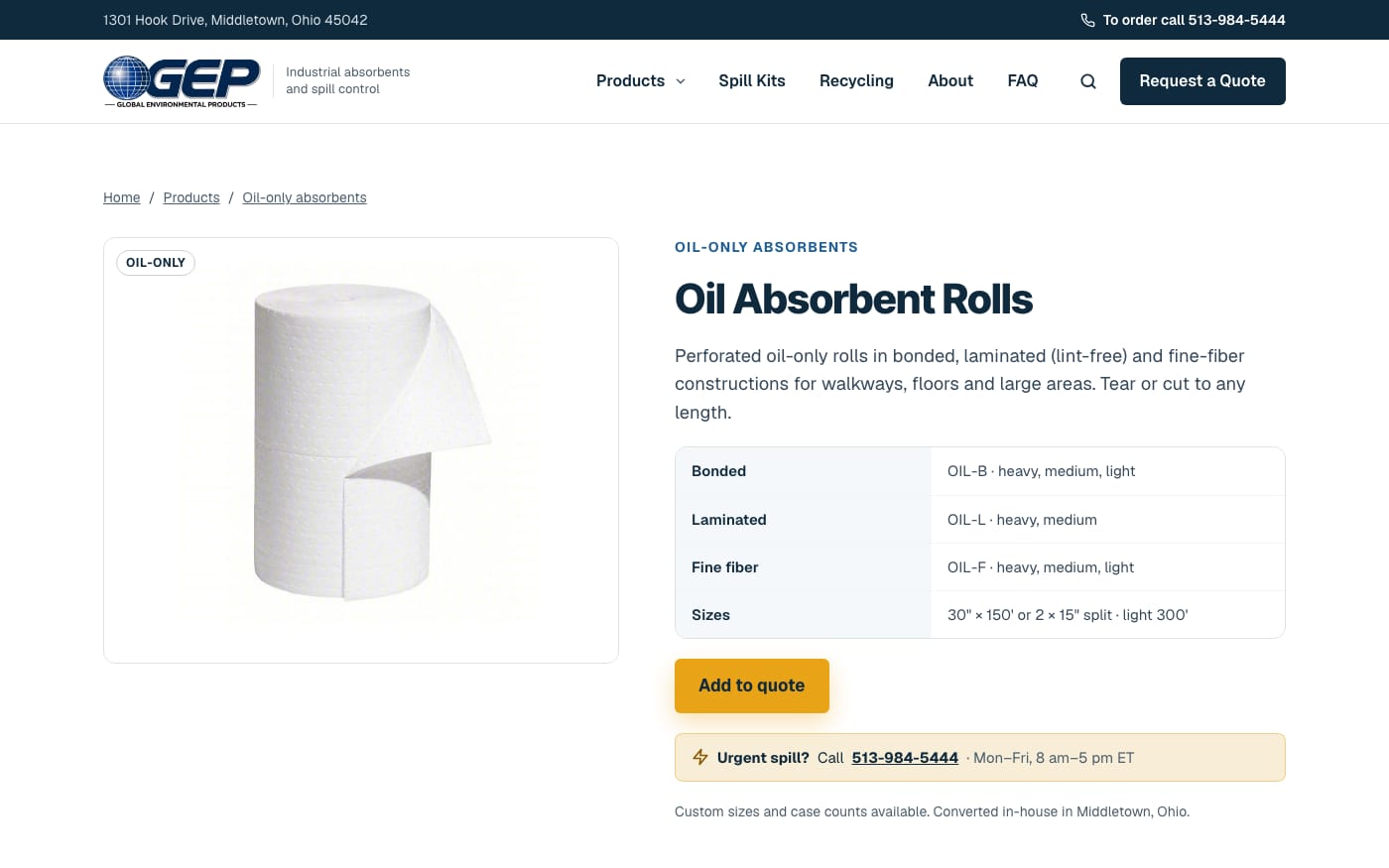
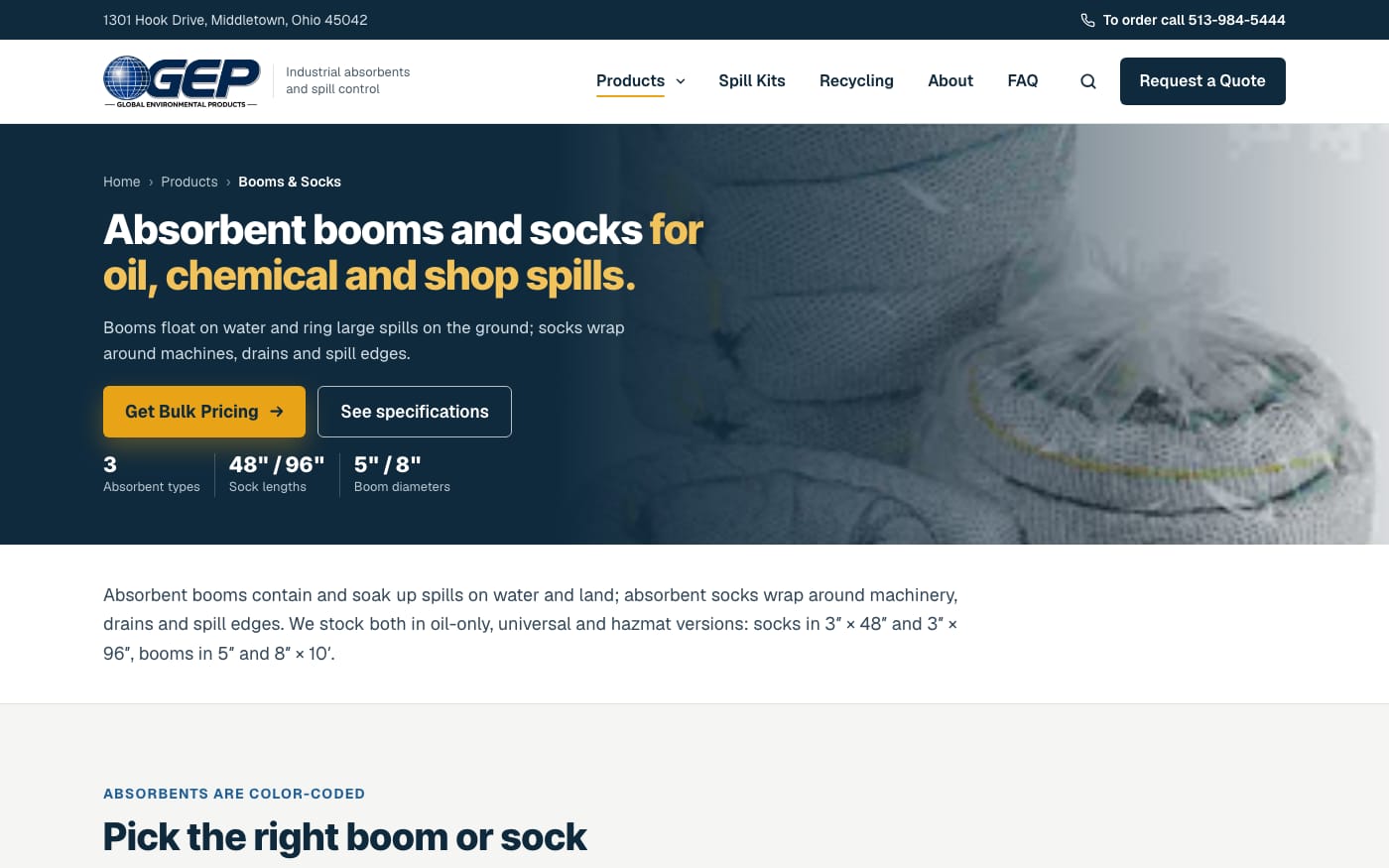
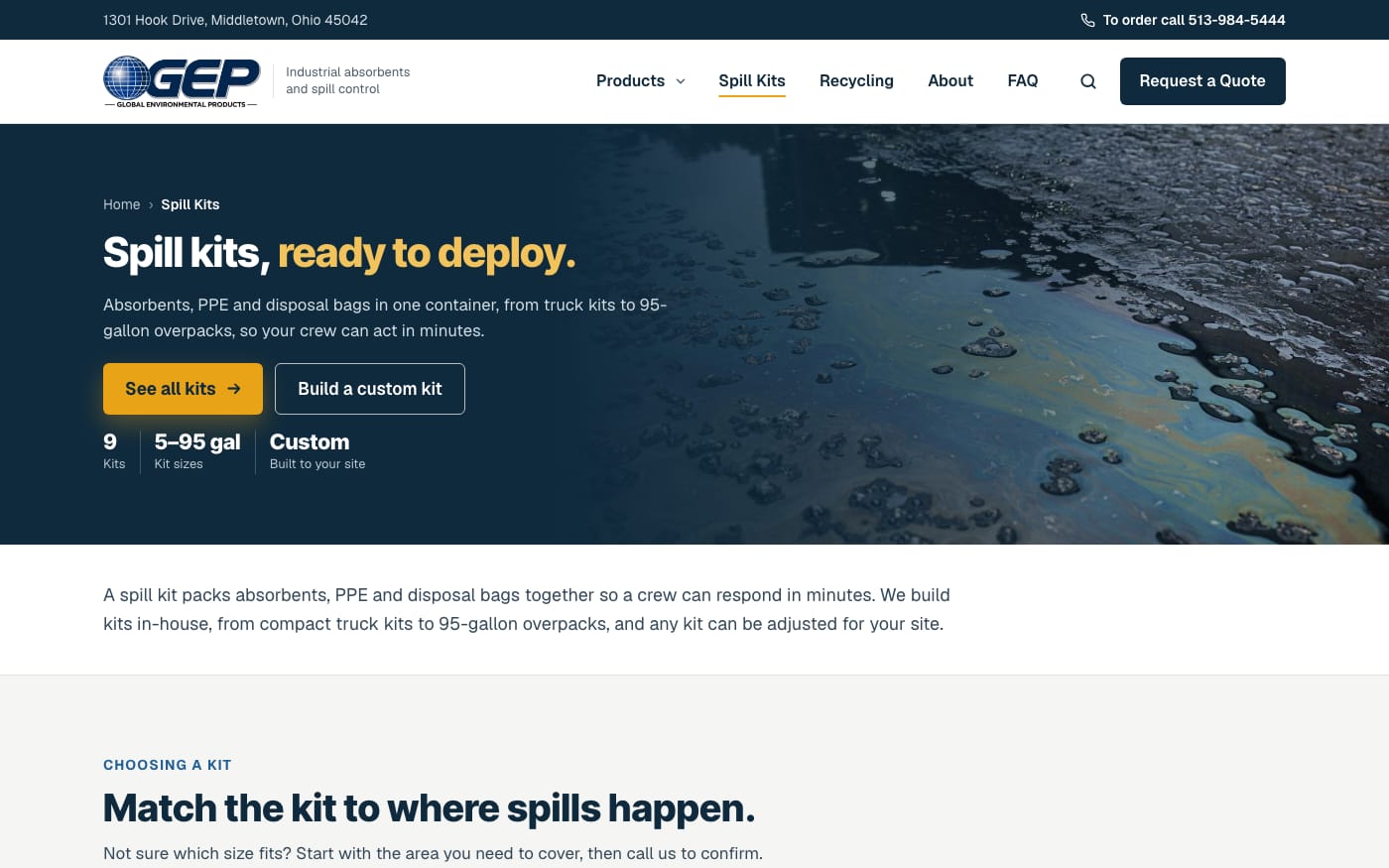
Every product now has its own page with a spec table, part numbers and case quantities, grouped into eight families with filtering and search. Products are stored the way WooCommerce stores them, so if GEP ever wants online ordering it's a plugin activation, not a migration.
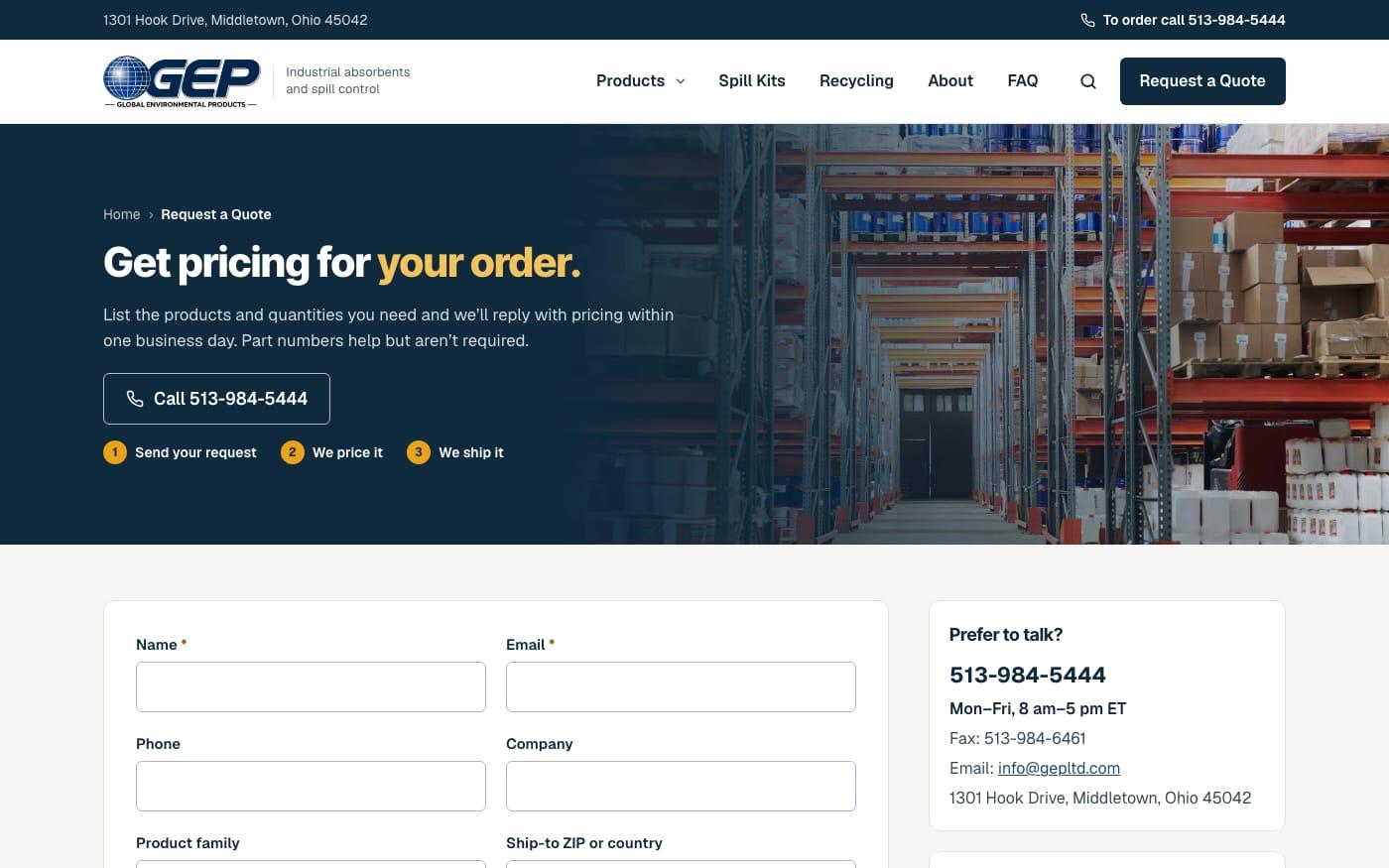
A quote workflow instead of a phone number
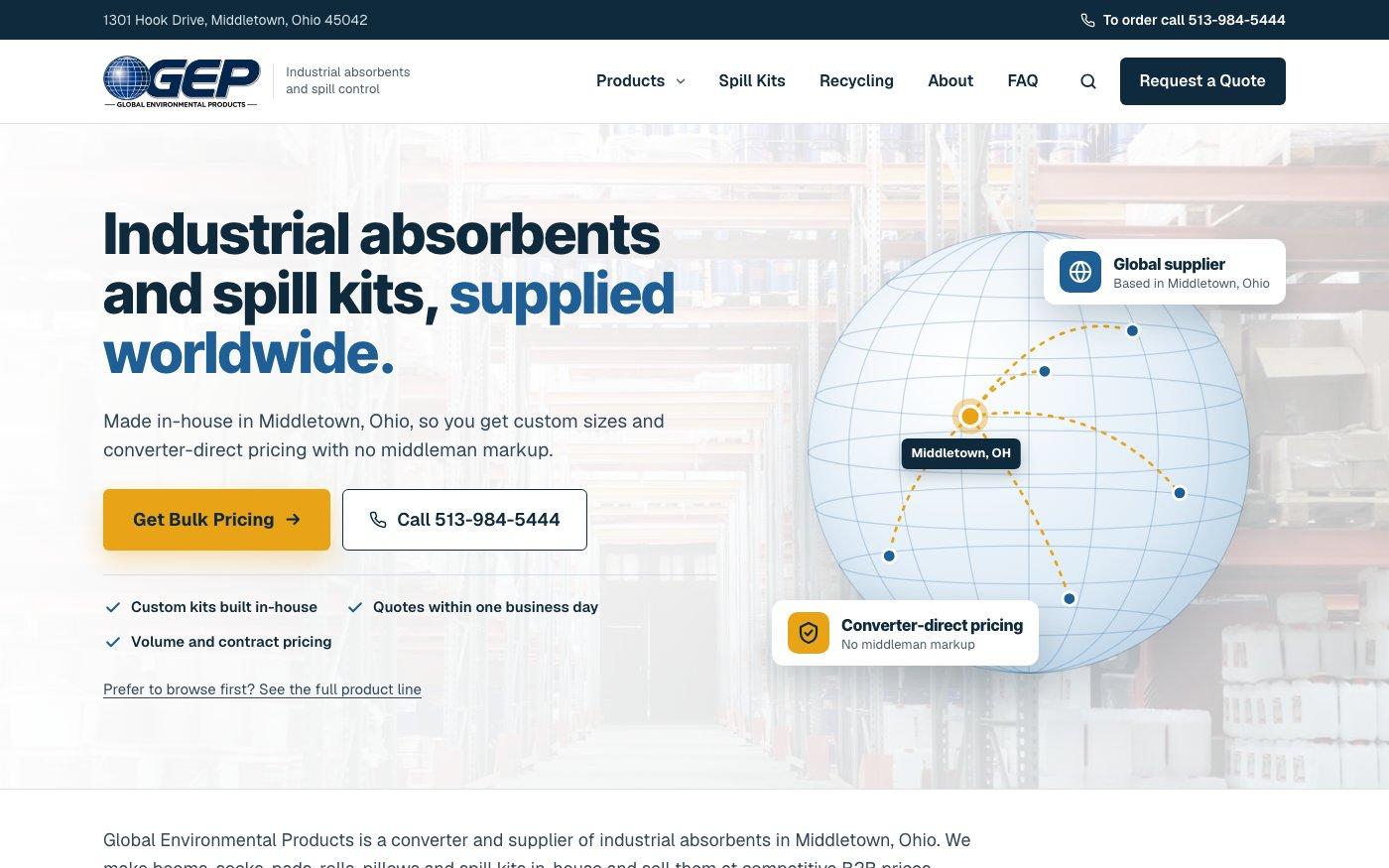
Buyers can add products to a quote list as they browse. The quote form shows the list with quantities and sends it with the request, so GEP's team gets a complete, actionable inquiry instead of a vague one. "Get Bulk Pricing" and a click-to-call number are on every page.
A theme the client can actually run
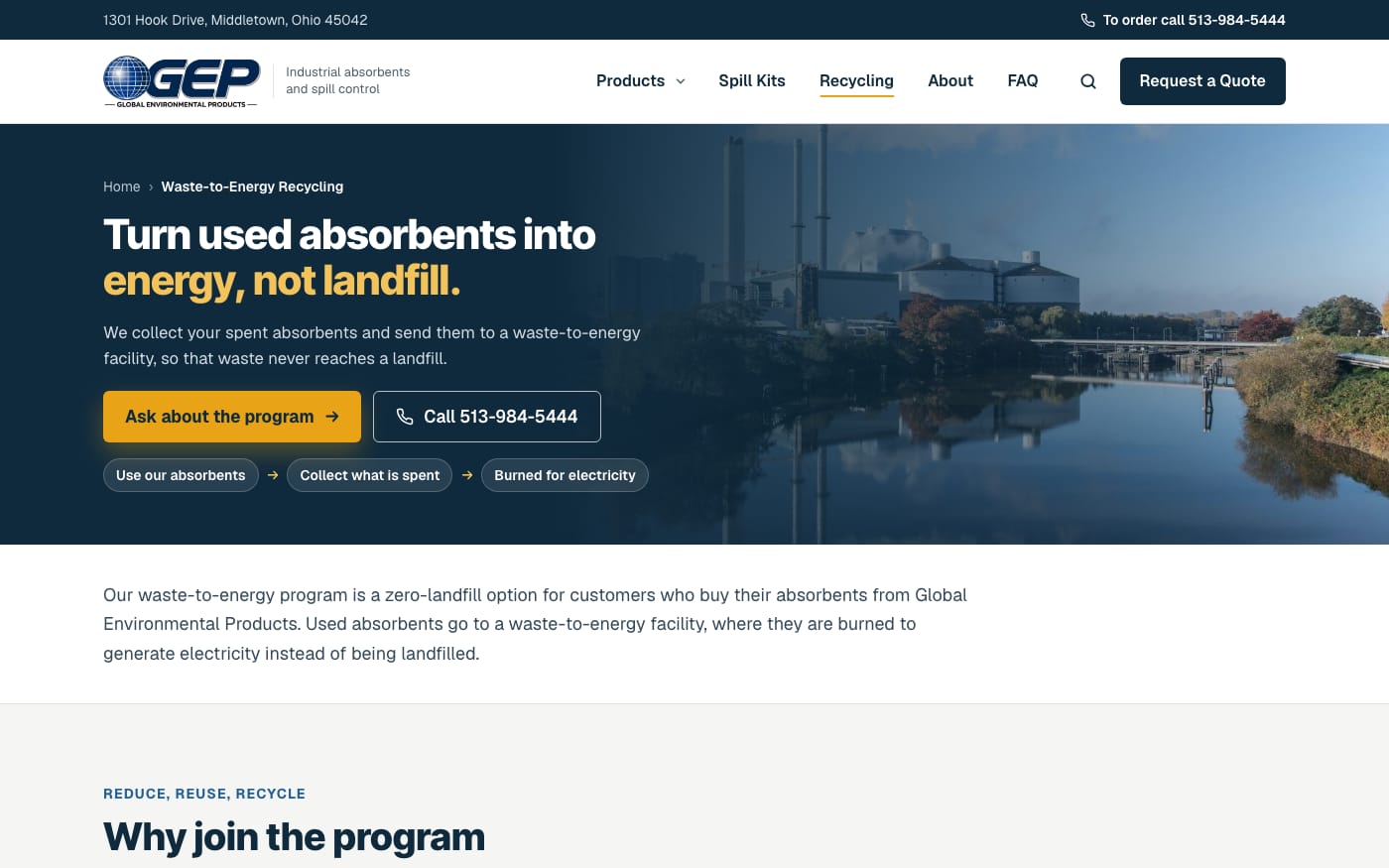
The site is a custom block theme with 15 purpose-built Gutenberg blocks (hero, product grid, spec table, FAQ, quote form, team and more), with no page builder and no ACF. Business details such as address, phone and hours live in one settings screen and feed the header, footer and structured data, so they stay consistent with the Google Business Profile.
Protecting what the old site had earned
Every URL in the old site's sitemap was mapped to its new home, and 57 of them were 301-redirected so existing search rankings and inbound links carried over to the new site.
Built to be found by search engines and AI
The theme outputs LocalBusiness schema on every page, FAQPage schema from FAQ blocks, and Product / ItemList schema from the catalog. A generated llms.txt indexes live pages and products for AI answer engines.
Measurement from day one, with consent
Quote submissions, phone clicks, email clicks and quote CTA clicks fire as GA4 events through GTM. Google Consent Mode v2 keeps everything off until the visitor opts in, and Microsoft Clarity loads only after analytics consent.
The Result
GEP went from a 15-year-old brochure to a modern catalog that leads buyers toward a quote, is ready for ecommerce when they are, and measures every lead it generates.